
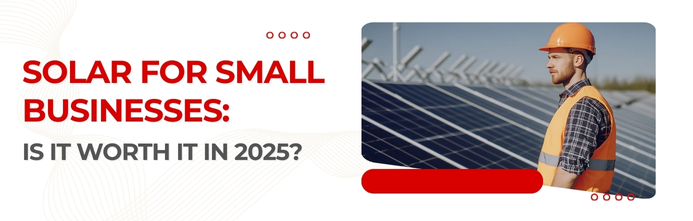
Solar for Small Businesses: Is It Worth It in 2025?
Posted on: 08 Dec 2025 Category: Solar Panel Benefits
The Ultimate 2025 Guide to Solar ROI, Savings & Smart Business Growth
Description
As electricity prices rise and sustainability becomes a business necessity, small businesses across the globe are asking one big question:
“Is switching to solar power really worth it in 2025?”
1. Why Solar Matters More Than Ever in 2025
Rising electricity bills + eco-conscious customers + better technology = Perfect time for solar.
Electricity prices in most parts of the world have increased by 8–15% annually over the last few years. Small businesses, already operating on tight margins, are feeling the heat.
Meanwhile:
- Solar panel costs have dropped nearly 40% in the last decade
- Global green policies are promoting renewable energy
- Customers prefer businesses that adopt eco-friendly practices
- Solar technology has become more efficient and more durable
In 2025, solar energy isn’t just a trend—it’s a strategic business advantage.
2. The Real Cost of Solar for Small Businesses in 2025
Understanding numbers made simple.
Many small business owners believe solar is expensive—but that’s an outdated misconception.
Average Solar Installation Cost (2025)
Depending on location and size:
- Small shops, boutiques, salons: ₹2–4 lakhs (3–6 kW)
- Restaurants, cafes: ₹4–7 lakhs (6–10 kW)
- Small warehouses/offices: ₹7–12 lakhs (10–20 kW)
However, up to 40–60% of this cost can be recovered through:
- Government subsidies
- Tax credits
- Depreciation benefits
- Reduced electricity bills
Why Costs Are Lower Now
- Mass manufacturing
- Higher panel efficiency
- Advanced inverters
- Competitive solar installers
Solar in 2025 is more affordable, more reliable, and more profitable than ever.
3. How Much Can a Small Business Actually Save?
Let’s break down the savings in a relatable way.
Monthly Electricity Cost Before Solar:
₹8,000 – ₹30,000 (depending on business size)
Monthly Electricity Cost After Solar:
₹500 – ₹3,000 (mainly fixed charges)
Typical Monthly Savings:
₹7,000 – ₹25,000
Yearly Savings:
₹1–3 lakhs
25-Year Lifetime Savings:
₹25–60 lakhs (or more)
Fun Fact:
Most small businesses recover the cost of solar in 2.5–4 years, after which everything is pure profit.
4. Solar ROI in 2025: What the Numbers Really Say
Solar in 2025 offers one of the highest investment returns for SMEs.
Average ROI:
18% – 35% annually
Compared to:
- Fixed deposits: 6–8%
- Mutual funds: 10–14%
- Real estate: 8–12%
Solar beats them all with:
- Guaranteed savings
- Zero volatility
- Long-term performance stability
Why ROI Is Higher in 2025
- Low installation cost
- Higher efficiency panels (up to 23%)
- Better incentives
- Higher grid electricity prices
In simple words: Solar gives returns faster, higher, and safer.
5. Top Government Incentives for Small Businesses in 2025
This is where businesses save BIG.
Governments globally are pushing renewable energy adoption. In India (for example), small businesses can get huge benefits:
Incentives You Can Get
1. Subsidy on Solar Panels (20–40%)
Varies by state and system size.
2. Accelerated Depreciation (40%)
Reduces taxable income sharply.
3. GST Benefits
Lower GST on renewable energy components.
4. Net Metering Policy
Sell extra electricity back to the grid.
5. Low-Interest Loans for Solar Installations
Available under MSME-friendly schemes.
Businesses who use incentives recover investments 50% faster.
6. Solar vs Traditional Electricity: A Crystal-Clear Comparison
|
Feature |
Solar Energy |
Grid Electricity |
|
Cost |
One-time low investment |
Monthly increasing bills |
|
ROI |
18–35%/year |
Zero |
|
Maintenance |
Minimal |
Moderate to high |
|
Lifespan |
25+ years |
N/A |
|
Carbon Emission |
Very low |
Very high |
|
Reliability |
High (with batteries) |
Often unstable |
Final Verdict:
Solar wins in every comparison category except initial setup—but even that is heavily subsidized now.
7. Environmental Impact Explained Simply
Even school students understand the importance of clean air—solar helps achieve that.
Benefits:
- Zero smoke
- Zero noise
- Reduces carbon footprint
- Leads to cleaner urban air
- Supports government’s green targets
For a small business, installing a 10 kW system reduces carbon emissions equal to:
- Planting 150–200 trees every year
- Avoiding 12–15 tonnes of CO₂ annually
Small businesses become local climate heroes with just one decision.
8. Common Myths Small Businesses Still Believe
Myth 1: Solar is too expensive
Reality: Costs dropped 40% and subsidies reduce it further.
Myth 2: Solar doesn’t work on cloudy days
Reality: Solar panels generate power even with low sunlight.
Myth 3: Maintenance is difficult
Reality: Just cleaning panels once a month is enough.
Myth 4: Solar won’t give returns fast
Reality: ROI is higher than most investments.
9. Choosing the Right Solar System for Your Business
Simple breakdown for beginners.
Types of Solar Systems
1. On-Grid Solar System
- Connects to electricity grid
- Cheapest option
- Best for shops, offices, salons
2. Off-Grid Solar System
- Works without grid
- Comes with batteries
- Best for rural or unreliable electricity areas
3. Hybrid Solar System
- Mix of on-grid + batteries
- Best for 24/7 businesses or restaurants
Factors to Consider
- Monthly electricity bill
- Available rooftop space
- Budget
- Future expansion
- Net metering availability
10. Step-by-Step Guide to Getting Solar in 2025
Beginner-friendly, actionable steps.
- Analyze your electricity bills (past 6–12 months).
- Identify available rooftop area.
- Choose certified solar installers.
- Get a detailed site survey.
- Compare 2–3 quotations.
- Check for subsidy eligibility.
- Install panels + inverter + net meter.
- Monitor your daily solar generation through app.
Bonus Tip:
Always check warranty on:
- Panels (25 years)
- Inverters (5–10 years)
- Installation (1–3 years)
11. Common Mistakes to Avoid
Picking the cheapest installer
Always choose experience over low price.
Not checking warranty
Panel warranty = performance guarantee.
Not considering future electricity needs
Businesses grow → power needs grow.
Ignoring service support
Always choose installers who offer long-term support.
12. Conclusion
Is Solar Worth It for Small Businesses in 2025? Absolutely YES.
From long-term savings and sustainability benefits to strong ROI and business credibility—solar energy in 2025 is not just a smart choice; it’s a strategic upgrade.
Small businesses that adopt solar early gain competitive advantage, reduce costs, and future-proof their operations.