
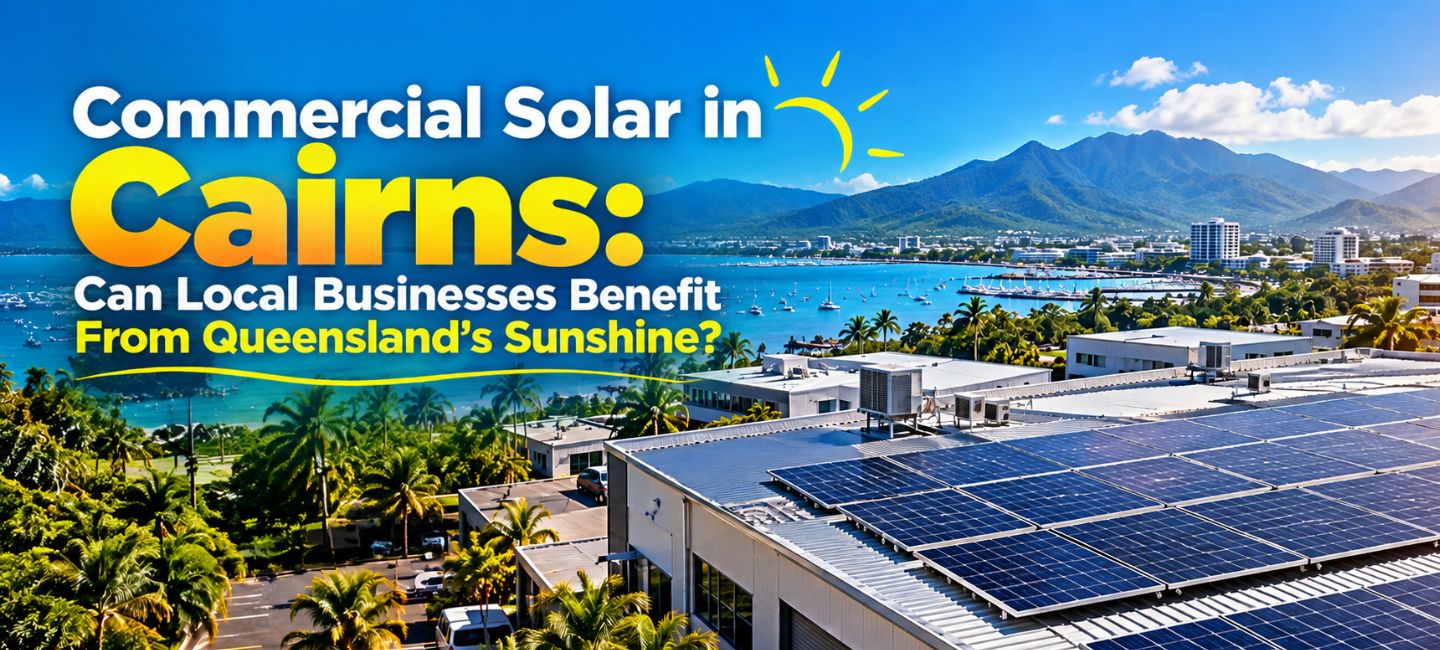
Introduction: Is Your Business Making the Most of Queensland's Sunshine?
Running a business in Cairns comes with plenty of advantages, including access to Queensland's abundant sunshine. But for many local businesses, electricity remains an important operating expense that can affect profitability and cash flow.
Whether you manage a hotel, warehouse, restaurant, retail store, manufacturing facility or agricultural business, your electricity consumption can represent a significant part of your operating costs.
So, here's an important question: Could your business turn Cairns' sunshine into an opportunity to manage electricity expenses more effectively?
Commercial solar power allows businesses to generate electricity from rooftop solar panels and use that energy to operate their premises. Depending on your energy consumption, electricity tariff and installation costs, a well-designed system can reduce the amount of electricity you need to purchase from the grid.
Queensland has strong solar resources, and Cairns Regional Council identifies solar energy as an important opportunity for the Cairns and Far North Queensland region. However, the financial benefits depend on the individual business and the suitability of its site.
In this guide, we'll explore how commercial solar works, which Cairns businesses may benefit most, what to consider before investing and how Sunny Gold Solar can help you explore your options.
1. Why Cairns Is Well Positioned for Commercial Solar
Queensland is known for its strong solar resources, making rooftop solar an option worth considering for many commercial properties.
Cairns' tropical climate offers substantial sunshine throughout the year. Businesses with suitable rooftops can use this resource to generate electricity during daylight hours, when many commercial operations are active.
However, solar performance depends on more than sunshine alone. Panel orientation, shading, temperature, rainfall, system design, equipment quality and maintenance all influence how much electricity a system produces.
How does commercial solar work?
A commercial solar photovoltaic (PV) system uses solar panels to convert sunlight into electricity.
The electricity generated can be used by compatible equipment and electrical systems within your business. When your solar panels generate less electricity than your premises require, you can generally draw the difference from the electricity grid.
If your system produces more electricity than your business consumes at a particular time, the excess may be exported to the grid, subject to your connection arrangements and electricity contract.
This means your potential savings depend not only on how much electricity your panels generate, but also on how much of that electricity your business can use directly.
The key takeaway: Cairns' sunshine creates an opportunity, but the best commercial solar system is one designed around your business's actual electricity requirements.
2. Can Commercial Solar Reduce Electricity Bills for Cairns Businesses?
One of the main reasons businesses consider commercial solar is the opportunity to reduce electricity purchases from the grid.
When your solar system generates electricity during operating hours, your business can use that electricity instead of buying the equivalent amount from its retailer.
The financial benefit depends on the value of the grid electricity avoided, the proportion of solar generation consumed on-site and the cost of installing and maintaining the system.
Why daytime energy consumption matters
Consider a business that operates refrigeration equipment, air conditioning, computers, machinery or commercial kitchen appliances throughout the day.
These activities may coincide with the hours when solar panels generate electricity, allowing the business to consume a useful share of its solar generation directly.
By comparison, a business that uses most of its electricity overnight may have a different savings profile and could need to consider load scheduling or battery storage.
Before investing, businesses should review their electricity bills and, where available, interval meter data to understand when and how electricity is consumed.
What expenses might solar help manage?
Depending on the tariff and system design, commercial solar may help businesses reduce:
- Electricity purchased from the grid during sunny periods.
- Exposure to some changes in electricity prices.
- Energy costs associated with suitable daytime business activities.
- The carbon emissions associated with purchased electricity.
Solar does not automatically eliminate electricity bills. Connection charges, demand charges, electricity used outside solar-generating hours and other tariff components may remain.
For this reason, a site-specific assessment is more useful than relying on a generic savings percentage.
3. Which Cairns Businesses Can Benefit From Commercial Solar?
Commercial solar is not limited to large industrial facilities. Many different types of businesses can investigate whether rooftop solar suits their premises and energy profile.
The following examples illustrate where commercial solar may be worth assessing.
Hotels and accommodation providers
Hotels, resorts and other accommodation businesses can have substantial electricity requirements for air conditioning, refrigeration, laundry facilities, lighting and other services.
Properties with significant daytime electricity consumption may be able to use solar generation directly to offset part of their grid electricity purchases.
For accommodation providers, sustainability initiatives may also complement broader environmental goals, although any marketing claims should accurately reflect the property's actual energy performance.
Warehouses and distribution centres
Warehouses often have extensive roof areas that may be suitable for solar panels, subject to structural assessments, shading, roof condition and other site constraints.
Businesses operating lighting, ventilation, refrigeration, packaging equipment or material-handling systems during daylight hours may find that solar aligns well with their electricity demand.
However, available roof space alone should not determine system size. Electricity consumption and export arrangements remain important.
Retail stores and shopping facilities
Supermarkets, retail outlets and shopping centres may use electricity for lighting, cooling, refrigeration, electronic equipment and air conditioning.
Where these loads coincide with solar generation, a suitable commercial solar system may help reduce grid electricity consumption.
Shopping centres and multi-tenancy buildings may require additional planning around ownership, metering, common areas and the allocation of energy costs.
Restaurants, cafés and commercial kitchens
Restaurants and cafés use electricity for refrigeration, food preparation, air conditioning, lighting and other equipment.
Businesses with substantial daytime operations may be able to use solar electricity directly. Those that operate mainly during the evening should assess their consumption profile carefully before deciding on system capacity or battery storage.
Manufacturing and industrial businesses
Manufacturing facilities can have significant electricity requirements from machinery, ventilation, compressors and production equipment.
Commercial solar may be worth evaluating where the production schedule aligns with solar generation. Larger sites may need more detailed electrical engineering, grid connection studies and assessments of peak demand.
Agricultural and food-processing businesses
Some agricultural operations in the wider Far North Queensland region use electricity for irrigation, pumping, refrigeration, processing and storage.
Solar may be suitable when the timing of these activities aligns with daylight generation. Seasonal operating patterns should be considered when estimating annual savings.
Which businesses benefit most?
Generally, businesses with suitable roofs, meaningful daytime electricity consumption and favourable installation economics are strong candidates for a commercial solar assessment.
4. How Much Can a Cairns Business Save With Commercial Solar?
There is no single savings figure that applies to every business in Cairns.
A small retail outlet, a large hotel and a manufacturing facility can have very different electricity usage patterns, system requirements and installation costs.
The most reliable way to estimate potential savings is to assess your actual electricity consumption, proposed solar generation and electricity tariff.
An illustrative commercial solar savings example
Suppose a business installs a commercial solar system that generates an estimated 120,000 kWh of electricity annually.
For illustration, assume the business consumes 75% of that generation directly and avoids purchasing grid electricity at an effective rate of $0.30 per kWh for the electricity displaced.
The estimated annual value of the grid electricity avoided would be:
- Annual solar generation: 120,000 kWh.
- Solar electricity used directly: 90,000 kWh.
- Assumed avoided electricity cost: $0.30 per kWh.
- Estimated annual grid electricity cost avoided: $27,000.
This example illustrates the value of solar electricity consumed directly by the business. It is not a quote or a forecast for a typical Cairns business.
It excludes potential export income and does not deduct maintenance, financing, installation costs or other ongoing expenses. Actual results may be higher or lower depending on system performance, tariffs and operating conditions.
What affects your commercial solar savings?
Several factors influence the financial outcome:
System capacity: The proposed system must suit the site's energy requirements and available roof space.
Electricity consumption: The timing of your electricity usage affects how much solar generation can be used directly.
Electricity tariff: The rate you avoid paying for grid electricity influences the value of solar generation.
Export arrangements: Any income or credit for surplus electricity depends on your contract and connection conditions.
Installation cost: Equipment, electrical work, roof access and project complexity affect the initial investment.
Maintenance and performance: Ongoing costs and actual energy generation influence the long-term result.
Financing and incentives: Applicable finance costs, incentives and tax treatment can change the overall economics.
For a more reliable assessment, compare projected annual savings, simple payback and long-term cash flow using realistic assumptions.
5. Is Commercial Solar Worth It for Small Businesses in Cairns?
Commercial solar is not exclusively for large companies with extensive roofs and substantial budgets.
Small businesses may also benefit when their electricity consumption, property and project economics support the investment.
For example, a café, medical practice, small warehouse or local retail store may be able to install a system sized to its daytime electricity demand.
The important question is not whether your business is large or small. It is whether the expected financial and operational benefits justify the installation cost.
What small businesses should consider
Before proceeding, ask yourself:
- How much electricity does the business use each month?
- What proportion of that electricity is consumed during daylight hours?
- Is the roof structurally suitable and in good condition?
- How long do you expect to occupy the premises?
- What are the estimated installation costs and payback period?
- Would a smaller system provide better value than a larger installation?
- Are financing arrangements or eligible incentives available?
If you rent your premises, discuss the proposal with your landlord before making commitments. A commercial solar installation may involve building alterations, approvals and arrangements concerning ownership, maintenance and any future change of tenancy.
The Australian Government's business solar guidance recommends evaluating electricity use, system size, costs and potential savings before purchasing a system.
6. Should Your Cairns Business Add a Solar Battery?
Solar panels generate electricity during daylight hours, but many businesses also consume electricity in the evening or overnight.
A solar battery can store some of the electricity generated during the day for use later. However, batteries involve additional upfront costs and do not automatically improve the financial return of every commercial solar installation.
When might a commercial battery make sense?
Battery storage may be worth assessing if your business:
- Uses significant electricity outside solar-generating hours.
- Has suitable time-of-use electricity tariffs.
- Wants to evaluate opportunities to manage peak demand charges.
- Has specific operational requirements for backup power.
- Can make effective use of stored electricity relative to the battery's cost.
Backup capability depends on the battery, inverter configuration and electrical installation. Not every battery system can power a building during a blackout.
Solar panels alone or solar with a battery?
For some businesses, installing solar panels first may offer a more attractive financial outcome. Others may have consumption patterns or operational requirements that justify evaluating battery storage at the same time.
The best choice depends on your electricity profile, tariff, battery costs, operating requirements and financial objectives.
Rather than assuming that a battery is essential, ask your solar provider to compare the expected economics of both options.
7. What About Cairns' Tropical Weather?
Cairns' climate presents both opportunities and practical considerations for commercial solar.
The region receives substantial solar resources, but tropical weather can include heavy rainfall, high humidity, strong winds and periods of cloud cover. These conditions should be considered when planning and maintaining a commercial solar installation.
Rain, clouds and solar generation
Solar panels can generate electricity in cloudy conditions, although output is generally lower than under strong sunlight.
Rain may wash away some surface dust, but it should not be treated as a complete maintenance solution. Debris, bird droppings, salt deposits in relevant locations and other contaminants may still affect performance.
Heat and equipment performance
Solar panels and electrical equipment operate within specified temperature ranges. Higher temperatures can reduce photovoltaic panel efficiency relative to standard test conditions.
System design should account for ventilation, mounting arrangements, equipment specifications and the conditions expected at the site.
Wind loading and roof suitability
Commercial rooftops need an appropriate assessment of structural capacity and mounting arrangements.
In a tropical region, it is particularly important to consider applicable wind-loading requirements, roof condition, water ingress risks and safe access for inspection and maintenance.
A qualified installer should design the system to meet applicable Australian standards and relevant network and regulatory requirements.
Local tip: Before installing solar on a commercial property in Cairns, arrange an appropriate site assessment rather than selecting a system based only on roof area or estimated sunshine hours.
8. How to Choose the Right Commercial Solar System in Cairns
Selecting a commercial solar system is an important business decision. The lowest quotation or largest proposed system is not necessarily the best option.
A suitable installation should reflect your electricity consumption, property conditions, budget and long-term business goals.
Step 1: Review your electricity bills
Collect at least 12 months of bills to understand your annual consumption, tariff structure and seasonal changes. Interval meter data can provide a clearer picture of when electricity is used.
Step 2: Assess the property
Evaluate roof condition, structural suitability, shading, orientation, available space and access for installation and maintenance.
Step 3: Compare system designs
Request proposals that explain the proposed capacity, equipment, expected generation, installation scope, warranties and monitoring arrangements.
Step 4: Review grid connection requirements
Commercial systems may require network approval and specific connection arrangements. Requirements can vary according to system size, inverter capacity, export intentions and the local network.
Confirm the applicable process before committing to the project.
Step 5: Evaluate the financial case
Ask for a transparent estimate of upfront costs, expected savings, export assumptions, ongoing costs and payback period.
Where possible, compare conservative, expected and optimistic scenarios.
Step 6: Choose an appropriate installation partner
Check relevant licences, applicable accreditation, experience with commercial projects, insurance, warranties and after-sales support.
Getting multiple detailed quotations can help you compare the value and suitability of each proposal.
9. Are Government Incentives Available for Commercial Solar in Queensland?
Depending on the installation and current program requirements, eligible Australian businesses may be able to access certain solar-related incentives or tax benefits.
However, eligibility is not automatic, and the rules depend on the specific system, project circumstances and applicable legislation.
Before relying on an incentive, confirm:
- Whether the proposed system and installation qualify.
- Whether the installation date affects eligibility.
- What registration, certification or other requirements apply.
- Whether the benefit is a direct payment, certificate value, tax treatment or another arrangement.
- Whether the benefit has been included transparently in the quotation.
Do not assume that every commercial system qualifies for the same incentives. For tax treatment, speak with a qualified accountant or tax adviser.
A sound business case should also show the project's economics without relying on an incentive that has not been confirmed.
10. How Sunny Gold Solar Can Help Cairns Businesses Explore Commercial Solar
Every business has different energy needs. A system that works well for a warehouse may not be appropriate for a restaurant, hotel or industrial facility.
Sunny Gold Solar provides solar solutions for residential and commercial customers, and businesses can begin by assessing whether a commercial installation suits their property and electricity consumption.
When exploring commercial solar for your Cairns business, consider discussing:
- Your current electricity costs and consumption profile.
- The suitable solar capacity for your property.
- Expected electricity generation and direct solar consumption.
- Equipment selection and installation requirements.
- Monitoring, warranties and maintenance.
- Potential savings and realistic payback assumptions.
- Whether battery storage should be evaluated.
A tailored assessment helps you make a decision based on your own site and business requirements instead of relying on general estimates.
Frequently Asked Questions About Commercial Solar in Cairns
1. Is Cairns a good location for commercial solar?
Cairns has substantial solar resources, which can make commercial solar worth investigating for suitable businesses. The actual benefits depend on the site's solar exposure, roof condition, electricity consumption, tariffs and installation costs.
2. How much can a business save with commercial solar?
Savings vary according to system size, electricity generation, direct consumption, tariffs, export arrangements and project costs. A site-specific assessment using actual electricity data is the best way to estimate potential savings.
3. Which businesses benefit most from commercial solar?
Businesses with suitable rooftops and significant electricity consumption during daylight hours may be well positioned to benefit. Examples include warehouses, retail outlets, hotels, restaurants, offices, manufacturing facilities and some agricultural operations.
4. Do commercial solar panels work during cloudy weather?
Yes. Solar panels can generate electricity in cloudy weather, although output is generally lower than under strong sunlight. System performance varies with cloud cover, temperature, shading and equipment design.
5. Do Cairns businesses need solar batteries?
No. Battery storage is optional and should be evaluated according to your energy usage, tariff, backup requirements and financial objectives. Some businesses may obtain better value from solar panels without a battery.
6. How long does commercial solar take to pay for itself?
There is no universal payback period. It depends on the installed cost, annual generation, the value of electricity consumed directly, export income, maintenance and other financial factors. Ask for a transparent calculation based on your own business.
7. Can a business install solar on a rented commercial property?
Potentially, but the business should obtain the necessary landlord or property-owner approvals and agree on ownership, maintenance, access and what happens when the lease ends.
8. Does commercial solar eliminate electricity bills?
Not necessarily. Businesses may continue to pay grid connection charges, purchase electricity outside solar-generating hours and incur other charges under their electricity contracts.
9. How do I get a commercial solar quote in Cairns?
Start by gathering your electricity bills and basic property information. Then request a site assessment and detailed quotation that explains system capacity, expected generation, installation scope, warranties and projected savings.
Conclusion: Turn Queensland's Sunshine Into a Business Opportunity
Cairns' abundant sunshine creates an opportunity for local businesses to explore renewable electricity generation and improve their approach to energy costs.
For businesses with suitable rooftops and daytime electricity consumption, commercial solar may help reduce grid electricity purchases, support sustainability objectives and provide greater visibility over long-term energy costs.
However, the financial benefits depend on choosing the right system, understanding your electricity tariff, assessing the property and using realistic savings estimates.
The best starting point is to review your electricity consumption and determine whether a tailored commercial solar system could support your business goals.
Ready to Explore Commercial Solar for Your Cairns Business?
Sunny Gold Solar can help you explore commercial solar options for your business in Cairns and North Queensland.
Whether you operate a warehouse, retail store, hotel, restaurant or industrial facility, take the first step towards understanding your site's solar potential.
Contact Sunny Gold Solar to discuss your commercial solar requirements and request a tailored assessment.
Make a more informed energy decision for your business by starting with the right information, a suitable system design and realistic financial expectations.