
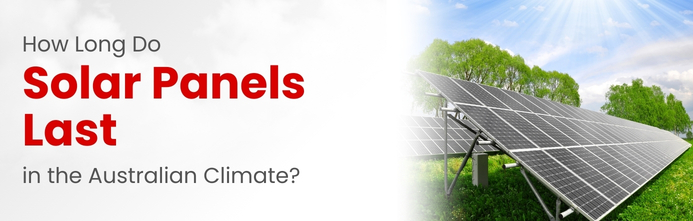
How Long Do Solar Panels Last in the Australian Climate?
Posted on: 29 Jan 2026 Category: Solar Panel Benefits
Introduction: Why Solar Panel Lifespan Matters in Australia
Australia is one of the sunniest countries on Earth, making it a global leader in solar energy adoption. With over 3.5 million homes using rooftop solar, one big question keeps popping up:
“How long do solar panels really last in the Australian climate?”
Whether you’re a school student learning about renewable energy, a homeowner planning a solar investment, or a business owner focused on ROI, this guide is written just for you-simple, practical, and deeply informative.
We’ll explore:
- The real-life lifespan of solar panels
- How Australian heat, UV rays, storms, and salt air affect them
- What manufacturers guarantee vs reality
- Actionable steps to extend panel life
Let’s break it down-no confusing jargon, just clear answers.
1. What Is the Average Lifespan of Solar Panels in Australia?
Short Answer:
25 to 30 years-and often even longer.
Long Answer:
Most modern solar panels installed in Australia are designed to last at least 25 years, which aligns with standard manufacturer performance warranties.
But here’s the interesting part:
Panels don’t suddenly stop working after 25 years. They simply produce slightly less electricity over time.
Typical Lifespan Breakdown
- 0-10 years: Near-peak performance
- 10-25 years: Gradual efficiency drop
- 25-35+ years: Still functional, reduced output
2. How Australian Climate Conditions Affect Solar Panels
Australia’s climate is both a blessing and a challenge for solar panels.
Extreme Sun & UV Exposure
Australia has:
- Strong UV radiation
- Long sunny hours
- High summer temperatures
Impact:
- Faster material ageing
- Slightly increased degradation if panels are low quality
Good news: High-quality panels are UV-tested and built specifically for such conditions.
Storms, Hail & Cyclones
Different regions face:
- Hailstorms (Victoria, NSW)
- Cyclones (Queensland, NT)
- Strong winds (coastal areas)
Most panels installed in Australia are:
- Tested for hail impact
- Rated for high wind speeds
- Installed under strict Australian standards (AS/NZS)
Coastal & Humid Environments
Living near the sea?
- Salt spray
- High humidity
- Faster corrosion risk
This doesn’t shorten lifespan drastically-but maintenance becomes more important.
3. Solar Panel Degradation Rate Explained (In Simple Terms)
What Is Degradation?
It’s the slow reduction in electricity output each year.
Average Degradation Rate in Australia:
- 0.5% per year (high-quality panels)
- Some premium panels: 0.3% per year
Real-Life Example:
If your panel produces 100% power in year 1:
- Year 10 → ~95%
- Year 20 → ~90%
- Year 25 → ~87–88%
Still extremely useful!
4. Understanding Solar Panel Warranties in Australia
This is where many people get confused-so let’s simplify.
Two Main Types of Warranties
Product Warranty (10–15 Years)
- Covers defects, manufacturing faults
- Protects against physical failure
Performance Warranty (25–30 Years)
- Guarantees minimum output (usually 80–87%)
- Based on degradation rate
Important:
A panel can outlive its warranty if well maintained.
5. Do Solar Panels Actually Last Longer Than 25 Years?
Yes-Many Do!
Real-world data from older installations shows:
- Panels from early 2000s still producing power
- Some operating 30-40 years
Why?
- No moving parts
- Solid-state technology
- Improved manufacturing quality
6. How Maintenance Affects Solar Panel Lifespan
Solar panels are low-maintenance, not no-maintenance.
Simple Maintenance Tips:
- Clean panels 1-2 times per year
- Remove dust, bird droppings, leaves
- Check inverter warnings
- Annual professional inspection (optional but helpful)
What Happens Without Maintenance?
- Reduced output
- Hot spots
- Faster wear in coastal areas
7. Other Components: What Fails Before Panels?
Panels last long—but other parts may not.
Inverter Lifespan:
- String inverter: 10–15 years
- Microinverter: 20–25 years
Mounting systems:
- Usually last 25+ years
- Made of aluminium & stainless steel
Plan for one inverter replacement during panel life.
8. Residential vs Commercial Solar Panel Lifespan
|
Feature |
Residential |
Commercial |
|
Usage |
Lower load |
Higher load |
|
Maintenance |
Occasional |
Regular |
|
Lifespan |
25-30 yrs |
25-35 yrs |
|
Monitoring |
Basic |
Advanced |
Commercial systems often last longer due to better monitoring and care.
9. How to Make Solar Panels Last Longer in Australia
Actionable Steps You Can Take Today:
- Choose Tier-1 solar panel brands
- Use CEC-accredited installers
- Ensure proper tilt & ventilation
- Clean panels regularly
- Monitor performance monthly
These steps can add 5-10 extra years of effective use.