
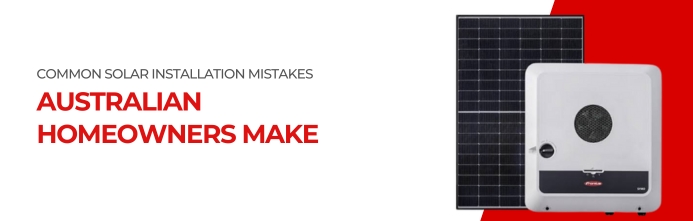
Common Solar Installation Mistakes Australian Homeowners Make (And How to Avoid Them)
Posted on: 29 Jan 2026 Category: Solar Panel Benefits
A practical, easy-to-understand guide to getting your solar investment right the first time
Solar power is one of the smartest long-term investments Australian homeowners can make-but only if it’s done correctly. Thousands of households lose money, efficiency, or warranty coverage every year due to avoidable solar installation mistakes.
This in-depth guide breaks down the most common solar installation mistakes Australian homeowners make, explains why they happen, and shows you exactly how to avoid them-in plain English. Whether you’re a school student researching renewable energy or a homeowner planning to install solar, this guide is designed to be clear, practical, and action-oriented.
Why Solar Installation Mistakes Are So Common in Australia
Australia has:
- One of the highest solar adoption rates in the world
- Generous rebates and incentives
- Rising electricity costs pushing homeowners toward solar
This rapid demand has also led to:
- Inexperienced installers
- Rushed installations
- Poor system design choices
Result: Many systems underperform despite having good panels.
Mistake #1: Choosing the Cheapest Solar Quote Without Understanding Value
What goes wrong
Many homeowners compare solar systems only by price, assuming all panels and installers are the same.
Why it’s a problem
- Cheap systems often use low-quality panels or inverters
- Installers may cut corners on safety
- After-sales support is usually weak or nonexistent
What to do instead
Focus on value, not price:
- Compare panel efficiency, not just wattage
- Check inverter brand reputation
- Confirm installation warranty (not just product warranty)
Quick tip:
If a quote is far cheaper than others, ask why-and get it in writing.
Mistake #2: Installing Panels in the Wrong Direction or Angle
What goes wrong
Panels are installed wherever there’s space-not where they perform best.
Why it’s a problem
In Australia:
- North-facing panels generate the most power
- Incorrect tilt reduces daily output
- East/West layouts need different system sizing
Best practice
- North-facing = ideal
- East/West = acceptable (with correct design)
- South-facing = usually inefficient
Recommended tilt:
- Roughly equal to your latitude (around 20–30° for most of Australia)
Mistake #3: Choosing the Wrong Inverter Size or Type
What goes wrong
Installers oversize or undersize the inverter to reduce cost.
Why it’s a problem
- Undersized inverter = power clipping
- Oversized inverter = wasted capacity
- Cheap inverters fail faster in Australian heat
What to check
- Inverter size should match 80–120% of panel capacity
- Choose CEC-approved brands
- Ensure inverter is installed in a cool, ventilated location
Mistake #4: Ignoring Your Actual Electricity Usage Patterns
What goes wrong
Homeowners install a system based on roof size, not usage.
Why it’s a problem
- Too small = no bill reduction
- Too large = wasted solar export
- Poor return on investment
Smart approach
- Analyse 12 months of electricity bills
- Understand day vs night usage
- Consider future changes:
- EV charging
- Home office
- Air conditioners
Mistake #5: Not Planning for Battery Compatibility
What goes wrong
Homeowners install solar without thinking about future batteries.
Why it’s a problem
- Some inverters are not battery-ready
- Retrofitting later costs more
- Limited battery brand options
How to future-proof
- Choose a hybrid inverter
- Confirm battery compatibility in writing
- Ask about software upgrade paths
Mistake #6: Not Checking Installer Accreditation and Licensing
What goes wrong
Installers claim experience but lack proper credentials.
Why it’s a serious risk
- No access to government rebates
- Electrical safety hazards
- Insurance may be invalid
Always verify:
- CEC-accredited installer
- Licensed electrician number
- Public liability insurance
Mistake #7: Skipping the Fine Print on Warranties
What goes wrong
Homeowners assume “25-year warranty” covers everything.
Reality check
There are three different warranties:
- Panel product warranty
- Performance warranty
- Installation workmanship warranty
What to confirm
- Who honours the warranty?
- Is labour included?
- Is the installer likely to exist in 10 years?
Mistake #8: Ignoring Shade and Future Obstructions
What goes wrong
Panels are installed without shade analysis.
Why it matters
- Even partial shade can cut output by 30–50%
- Trees grow
- Neighbours build extensions
Smart solution
- Use shade analysis tools
- Install optimisers or microinverters
- Plan panel layout strategically
Mistake #9: Poor Cable Management and Unsafe Installations
What goes wrong
Messy wiring, exposed cables, poor mounting.
Why it’s dangerous
- Fire risk
- Roof damage
- System failure during storms
What quality looks like
- UV-resistant conduits
- Neatly clipped cables
- Weather-sealed roof penetrations
Mistake #10: Not Monitoring System Performance After Installation
What goes wrong
Homeowners “set and forget” their solar system.
Why it’s costly
- Faults go unnoticed
- Output slowly degrades
- Savings drop silently
Best habit
- Check monitoring app monthly
- Compare output year-on-year
- Act fast if production drops
Actionable Checklist: What to Do Before Installing Solar
Compare value, not price
Confirm roof orientation and shading
Choose quality inverter brands
Match system size to usage
Plan for future batteries
Verify installer accreditation
Understand all warranties
Ensure monitoring access
Conclusion: Solar Done Right Saves Money for Decades
Solar energy in Australia is powerful, affordable, and future-proof—but only when installed correctly. Most solar installation mistakes aren’t technical; they’re decision mistakes made before installation even begins.
By avoiding the common pitfalls outlined above, you can:
- Maximise long-term savings
- Protect your home
- Enjoy reliable clean energy for 20+ years